


 16 July, 2026
 App & Website
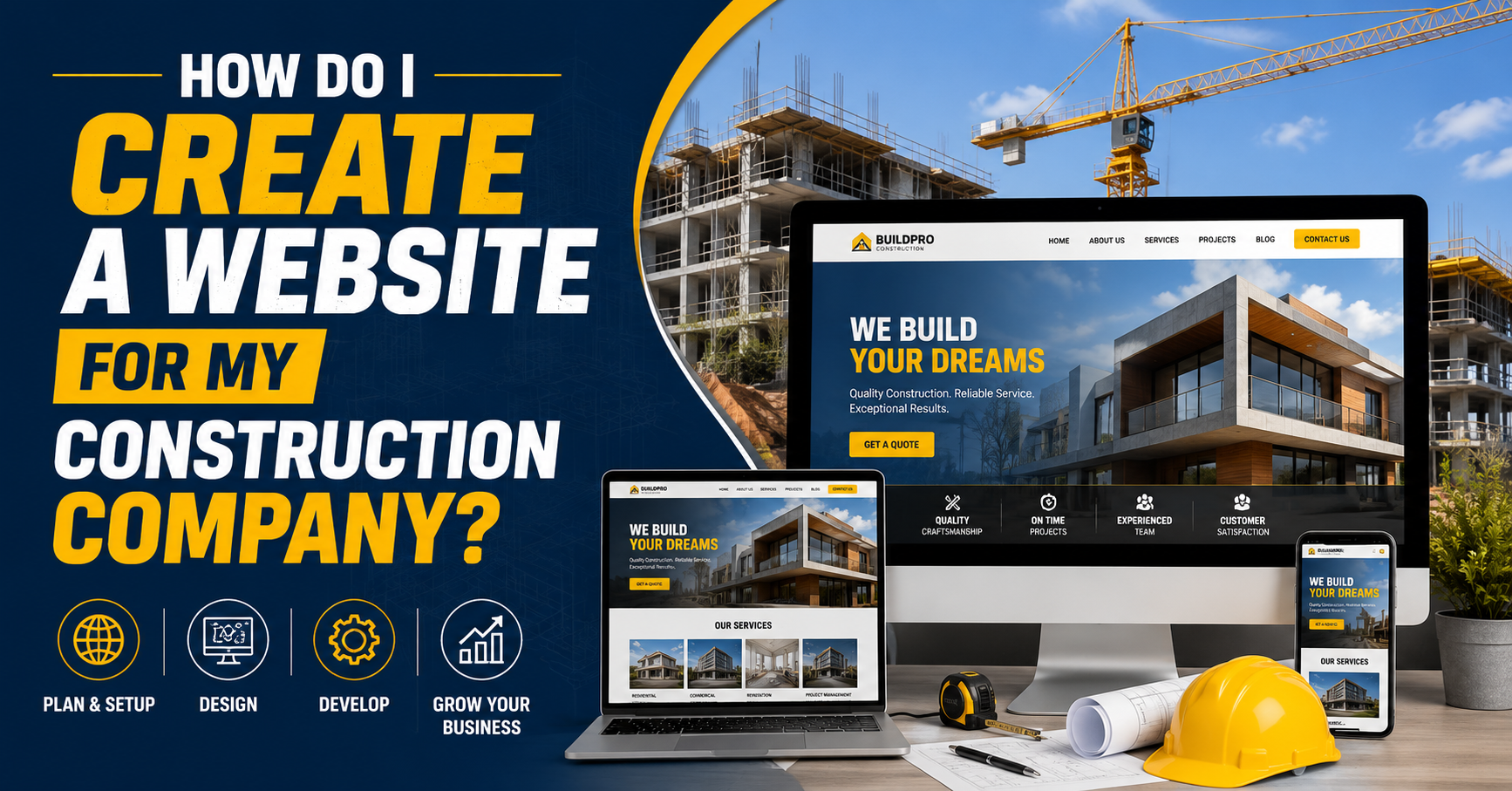
How Do I Create a Website for My Construction Company?
Having a professional website is no longer optional for construction companies. Whether you specialise in residential homes, commercial buildings, renovations, extensions, or civil construction projects, your website is often the first impression potential clients have of your business. Before making a phone call or requesting a quote, most customers search online to compare contractors, read reviews, and view completed projects.
A well-designed construction website helps establish credibility, showcase your expertise, and generate high-quality enquiries around the clock. It serves as your online portfolio, marketing tool, and lead generation platform all in one. Unlike traditional advertising, a website works for your business 24 hours a day, making it easier for customers to learn about your services and contact you whenever they are ready.
Developing a construction company website doesn’t have to be complicated. With proper planning, professional design, useful content, and search engine optimisation (SEO), you can build a website that attracts visitors and converts them into paying clients.
Why a Website Is Essential for a Construction Business
A professional website helps your construction company attract more customers, build credibility, and generate quality leads. Key benefits include:
- Build Trust: Show your business is professional and reliable.
- Showcase Projects: Display completed construction work with photos.
- Generate More Leads: Receive enquiries and quote requests 24/7.
- Increase Online Visibility: Help customers find your business through search engines.
- Highlight Your Services: Clearly explain what your company offers.
- Stand Out from Competitors: Differentiate your business with a professional online presence.
- Display Customer Reviews: Build confidence with testimonials and success stories.
- Promote Your Experience – Showcase your qualifications, licences, and industry expertise.
- Improve Customer Communication – Make it easy for clients to contact your team.
- Support Business Growth – Turn website visitors into long-term customers.
Steps to Develop a Construction Company Website
In this guide, we’ll walk through every step involved in creating a successful construction company website that supports long-term business growth.
1. Define Your Website Goals
Before building your website, take time to define what you want it to achieve. Every decision from design to content should support your business objectives.
Identify Your Target Audience
Think carefully about the types of customers you want to attract. For example, your audience may include:
- Homeowners planning renovations or new homes
- Commercial property developers
- Builders requiring subcontractors
- Government agencies
- Industrial businesses
- Real estate developers
- Architects and designers
Understanding your ideal customer allows you to create content that answers their questions and encourages them to contact your business.
Decide What You Want Visitors to Do
Every page should encourage visitors to take action. Common website goals include:
- Requesting a free quote
- Booking a consultation
- Calling your office
- Completing an enquiry form
- Viewing your project gallery
- Downloading company information
- Learning about your construction services
A clear call-to-action on every page increases the likelihood of converting website visitors into customers.
2. Choose a Professional Domain Name and Hosting
Your domain name is your online business address. It should be simple, memorable, and easy to spell.
Tips for Choosing the Right Domain
When selecting a domain name:
- Use your construction company name whenever possible.
- Keep it short and easy to remember.
- Avoid unnecessary numbers or hyphens.
- Choose a trusted domain extension such as .com or your country’s preferred extension.
- Ensure the domain reflects your brand identity.
A professional domain immediately gives visitors confidence in your business.
Select Reliable Web Hosting
Website hosting affects your website’s speed, security, and reliability. Slow-loading websites often lose potential customers before they even view your services.
Look for hosting that includes:
- Fast loading speeds
- High uptime guarantees
- Daily backups
- SSL security certificates
- Automatic software updates
- Malware protection
- Responsive technical support
Reliable hosting ensures your website remains accessible whenever potential clients visit.
3. Plan a User-Friendly Website Structure
A well-organised website makes it easy for visitors to find the information they need. Confusing navigation can frustrate users and increase the chances they’ll leave your website.
Before designing your website, create a logical site structure.
A clear and well-organised website helps visitors quickly find the information they need and encourages them to contact your business. Include the following essential pages:
- Home Page: Introduce your company, highlight your services, showcase featured projects, and include clear call-to-action buttons.
- About Us: Share your company story, experience, qualifications, licences, and commitment to quality and safety.
- Services: Create dedicated pages for each service, such as residential construction, commercial construction, renovations, extensions, and project management.
- Project Portfolio: Showcase completed projects with high-quality photos and brief descriptions to demonstrate your expertise.
- Testimonials: Display genuine customer reviews to build trust and confidence with potential clients.
- Blog: Publish helpful articles on construction tips, renovation ideas, industry trends, and FAQs to attract more website visitors.
- Frequently Asked Questions: Answer common customer questions about your services, process, timelines, and warranties.
- Contact Us: Make it easy for customers to get in touch by including your phone number, email, contact form, business address, and business hours.
A simple, user-friendly website structure improves the customer experience and helps convert visitors into enquiries.
4. Create High-Quality Service Pages
One of the biggest mistakes construction companies make is placing all their services on a single page. While this may seem convenient, it doesn’t provide enough information for visitors or search engines.
Instead, create a dedicated page for each major service your company offers. This approach allows you to explain your expertise in detail while improving your website’s SEO.
Each service page should include:
- A clear overview of the service
- Who the service is suitable for
- The construction process
- Benefits of choosing your company
- Frequently asked questions
- Related project photos
- A strong call-to-action
For example, if you provide home renovation services, explain the renovation process from consultation through to project completion. If you specialise in commercial construction, discuss your experience with office buildings, retail spaces, warehouses, or industrial facilities.
Detailed service pages help visitors understand exactly what you offer and increase the likelihood of appearing in search engine results for specific construction services.
5. Showcase Your Construction Projects
Construction is one of the most visual industries, making your project portfolio one of the most valuable sections of your website.
Potential clients want proof that you can deliver quality workmanship before they invest in your services. High-quality project galleries help build confidence and demonstrate your experience.
Each project should include:
Professional Images: Use high-resolution photographs that highlight the quality of your workmanship. Include multiple images showing different stages of the project.
Project Overview: Provide a brief description explaining:
- Type of construction project
- Scope of work
- Project objectives
- Timeline
- Special features
Challenges and Solutions: Every construction project comes with unique challenges. Explaining how your team solved these problems demonstrates your expertise and problem-solving skills.
Client Outcomes: If possible, explain how the completed project benefited the client. For example:
- Increased property value
- Improved functionality
- Better energy efficiency
- Modern design
- Additional living space
Detailed case studies help visitors imagine similar results for their own projects.
6. Write Clear and Helpful Website Content
Your website content should focus on solving customer problems rather than simply promoting your business.
Avoid using technical construction jargon that may confuse homeowners. Instead, write in plain, easy-to-understand language that answers common customer questions.
Good website content should explain:
- What you do
- How your process works
- Why clients should choose your company
- What makes your business different
- How customers can get started
Focus on Customer Benefits
Instead of listing features, explain the benefits.
For example:
Instead of writing:
“We provide complete project management.”
Explain:
“Our experienced project managers coordinate every stage of your build, helping keep your project on schedule, within budget, and stress-free.”
This customer-focused approach creates stronger engagement.
Explain Your Construction Process
Many clients have never managed a construction project before.
Outline each step clearly, such as:
- Initial consultation
- Site inspection
- Design and planning
- Detailed quotation
- Contract approval
- Construction begins
- Quality inspections
- Project completion
- Final handover
Knowing what to expect helps customers feel more confident about working with your company.
7. Make Your Website Mobile-Friendly
Today, many people search for construction companies using their smartphones.
If your website doesn’t display properly on mobile devices, visitors are likely to leave and choose another contractor.
A responsive website automatically adjusts to different screen sizes, providing a smooth experience on desktops, tablets, and smartphones.
Important mobile-friendly features include:
- Easy-to-read text
- Large navigation buttons
- Fast loading pages
- Click-to-call phone numbers
- Simple contact forms
- Optimised images
Google also favours mobile-friendly websites in its search rankings, making responsive design essential for SEO.
8. Improve Website Speed
Website speed affects both user experience and search engine rankings.
Visitors expect pages to load quickly. If your website takes too long to appear, many users will leave before viewing your services.
Ways to improve website speed include:
- Compress large images
- Minimise unnecessary plugins
- Enable browser caching
- Choose quality web hosting
- Optimise website code
- Use modern image formats
Fast websites create a better experience and improve conversion rates.
9. Add Trust-Building Features
Construction projects often involve significant financial investment, so trust plays a major role in purchasing decisions.
Your website should reassure visitors that your business is experienced, reliable, and professional.
Consider including:
Customer Testimonials: Display genuine reviews from satisfied clients throughout your website.
Testimonials should mention:
- Quality of workmanship
- Communication
- Reliability
- Project completion
- Overall experience
Licences and Certifications: Show that your business meets industry requirements by displaying relevant licences, qualifications, and certifications.
Insurance Information: Let customers know that your company carries appropriate insurance, giving them additional peace of mind.
Industry Memberships: Membership in professional construction associations demonstrates commitment to industry standards and best practices.
Awards and Recognition: If your company has received awards or industry recognition, feature these prominently to strengthen credibility.
10. Include Essential Website Features
A successful construction website should provide visitors with everything they need to contact your business quickly and easily.
Essential features include:
- Online quote request form
- Contact page
- Click-to-call phone number
- Interactive Google Map
- Email enquiry form
- Project gallery
- Service pages
- Frequently Asked Questions
- Customer testimonials
- Social media links
Optional features include:
- Live chat
- Online appointment booking
- Downloadable brochures
- Cost calculators
- Newsletter signup
These features improve user experience and help convert visitors into enquiries.
11. Optimise Your Website for Search Engines (SEO)
Building a professional website is only the first step. To attract a steady stream of potential customers, your website needs to be optimised for search engines. Search Engine Optimisation (SEO) helps your website appear in search results when people are looking for construction services in your area.
An effective SEO strategy increases your online visibility, drives more organic traffic, and generates enquiries without relying solely on paid advertising.
Target the Right Keywords: Research the phrases your ideal customers are searching for and naturally include them throughout your website. Examples include:
- Construction company
- Home builder
- Commercial construction
- House renovations
- Home extensions
- Building contractor
- Custom home builder
- Construction services
Avoid stuffing keywords into your content. Instead, write naturally and focus on providing valuable information.
Optimise Page Titles and Meta Descriptions: Every page should have a unique title and meta description that clearly explains its content. Well-written titles and descriptions encourage users to click on your website when it appears in search results.
Use Clear Heading Structure: Organise your content using one H1 heading per page, followed by H2 and H3 headings. This improves readability for visitors and helps search engines understand your content.
Optimise Images: Construction websites often contain many high-quality project images. Optimise these images by:
- Compressing file sizes
- Using descriptive file names
- Adding alt text
- Choosing modern image formats
This helps improve page speed and accessibility.
Internal Linking: Link related pages throughout your website. For example, a home renovation page can link to your project gallery, blog articles, or contact page. Internal links make it easier for visitors to explore your website while helping search engines understand your site structure.
12. Create a Construction Blog
A blog is one of the best long-term marketing tools for a construction company. Regularly publishing useful articles demonstrates your expertise and increases the number of keywords your website can rank for.
Educational content also helps build trust with potential clients before they contact your business.
Some useful blog topics include:
- How Much Does It Cost to Build a New Home?
- Home Renovation Mistakes to Avoid
- Choosing the Right Building Materials
- Residential vs Commercial Construction
- How Long Does a Home Extension Take?
- Building Approval Process Explained
- Modern Home Design Trends
- Tips for Planning Your Dream Home
- Sustainable Construction Practices
- Questions to Ask Before Hiring a Builder
Consistently publishing high-quality blog content can significantly increase organic traffic over time.
13. Secure Your Website
Website security protects both your business and your customers. A secure website also builds trust and contributes to better search engine rankings.
Essential security measures include:
- SSL certificate (HTTPS)
- Strong administrator passwords
- Regular software updates
- Daily backups
- Firewall protection
- Malware scanning
- Spam protection for contact forms
Regular maintenance helps prevent security issues and keeps your website running smoothly.
Promote Your Construction Website
Once your website is live, it’s important to promote it so potential customers can find your business.
1. Local SEO
Optimise your website for the areas you service by creating location-specific pages and including relevant local information. This can improve your visibility for local searches.
2. Google Business Profile
Create and maintain an up-to-date Google Business Profile. Keep your business information accurate, upload project photos, respond to reviews, and regularly post updates to improve your local online presence.
3. Social Media Marketing
Share your completed projects, construction progress, customer testimonials, and helpful tips on social media platforms. This keeps your audience engaged and drives traffic back to your website.
4. Google Ads
Paid advertising can quickly generate enquiries for high-value construction services. Google Ads allows you to target customers actively searching for builders, renovators, or contractors in your service area.
5. Email Marketing
Build an email list by encouraging visitors to subscribe to updates or newsletters. You can share company news, completed projects, seasonal offers, and useful construction advice to stay connected with potential and existing clients.
Common Mistakes to Avoid While Developing a Builder Website
Even a visually appealing website can fail if it overlooks the basics. Avoid these common mistakes:
- Using low-quality or outdated project photos
- Providing very little information about your services
- Having confusing navigation
- Missing or difficult-to-find contact details
- Slow-loading pages
- Not optimising for mobile devices
- Using generic stock images instead of real project photos
- Ignoring SEO best practices
- Having outdated content
- Failing to include clear calls-to-action
Review your website regularly to ensure it continues to meet customer expectations and reflects your latest projects and services.
How Much Does It Cost to Build a Construction Company Website?
The cost of building a construction website depends on its size, features, and level of customisation.
Some businesses choose to build a basic website themselves using website builders, while others invest in a professionally designed website that includes custom branding, advanced functionality, SEO services, and ongoing support.
Typical costs may include:
- Domain name registration
- Web hosting
- Website design and development
- Professional photography
- Content writing
- Search engine optimisation
- Website maintenance
- Security updates
Although a professional website requires an upfront investment, it can deliver a strong return by generating high-quality leads and helping your business grow over the long term.
Keep Your Construction Website Updated
A website should never be treated as a one-time project. Regular updates show visitors that your business is active and committed to providing current information.
Consider updating your website by:
- Adding recently completed projects
- Publishing new blog articles
- Refreshing service information
- Updating team profiles
- Responding to customer reviews
- Checking contact information
- Improving page speed and security
An up-to-date website performs better in search engines and provides a better experience for potential clients.
Final Thoughts
Creating a website for your construction company is one of the most valuable investments you can make for your business. A professional website not only showcases your expertise but also helps you build trust, attract qualified leads, and stand out in a competitive market.
Focus on creating a clean, easy-to-navigate website that highlights your services, showcases completed projects, and provides useful information for potential customers. Combine this with strong SEO, regular content updates, mobile-friendly design, and clear calls-to-action to maximise your website’s performance.
Remember that your website is often the first interaction potential clients have with your business. By investing in a professional online presence and keeping it updated, you’ll create a powerful marketing tool that supports your construction company for years to come, helping you secure more enquiries, win more projects, and build a stronger reputation in the industry.
If you’re looking for a professional web development company in Australia, contact our experienced team today. We specialise in designing high-performing construction websites that are fast, mobile-friendly, SEO-optimised, and built to generate more enquiries for your business. Get in touch for a free consultation and let us help you build a website that works as hard as you do.





 sales@appandwebsite.au
 1800 491 810