


 20 August, 2026
 App & Website
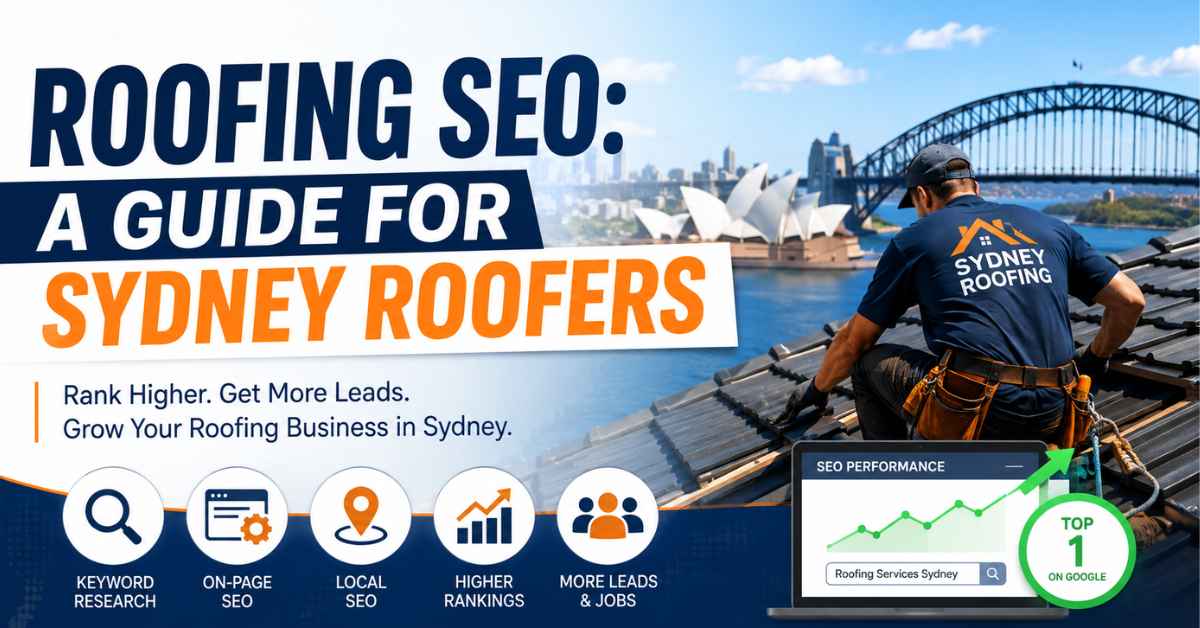
Roofing SEO: A Guide for Sydney Roofers
The roofing industry in Sydney is highly competitive. Whether you provide roof repairs, roof restoration, roof replacement, guttering, metal roofing or emergency roofing services, potential customers are increasingly using Google to find local roofers.
When someone searches for terms such as “roof repairs Sydney,” “roof replacement near me,” “roof restoration Sydney” or “emergency roofer Sydney,” appearing near the top of Google can make a significant difference to the number of enquiries your business receives.
This is where roofing SEO becomes important.
Search engine optimisation (SEO) helps your roofing business improve its visibility in Google search results and attract people who are actively looking for roofing services. Unlike traditional advertising, SEO can continue generating traffic and enquiries after your website has been properly optimised.
What Is Roofing SEO?
Roofing SEO is the process of optimising a roofing company’s website and online presence so it can rank for relevant searches on Google and other search engines.
A roofing SEO strategy can target searches including:
- Roof repairs Sydney
- Roof restoration Sydney
- Roof replacement Sydney
- Metal roofing Sydney
- Tile roof repairs Sydney
- Emergency roof repairs Sydney
- Roof leak repair Sydney
- Gutter replacement Sydney
- Roof maintenance Sydney
- Roofing contractors Sydney
The goal isn’t simply to bring more visitors to your website. The real objective is to attract qualified local customers who are likely to contact your business.
Why SEO Is Important for Sydney Roofers
Sydney has a large number of roofing contractors competing for customers. Having a professional website is no longer enough to stand out.
When your website appears on the first page of Google for valuable roofing searches, customers are more likely to discover your business when they need your services.
SEO can help roofers:
- Increase website traffic
- Generate more phone calls
- Increase quote requests
- Build brand visibility
- Reach customers in specific suburbs
- Compete with larger roofing companies
- Generate long-term organic traffic
- Reduce reliance on paid advertising
For example, a customer searching for “roof repair Parramatta” already has a specific problem and is likely looking for a contractor. Ranking for that search can put your roofing company in front of a highly relevant audience.
Start With Roofing Keyword Research
Keyword research should be the foundation of your SEO campaign.
Instead of targeting only broad keywords such as “roofer Sydney,” identify the different services and locations your customers search for.
a. Roofing Service Keywords
Depending on your services, you may target:
- Roof repairs
- Roof restoration
- Roof replacement
- Roof installation
- Metal roofing
- Tile roofing
- Colorbond roofing
- Roof leak repairs
- Emergency roofing
- Gutter repairs
- Gutter replacement
- Downpipe installation
- Roof maintenance
- Skylight installation
- Commercial roofing
These keywords can then be combined with Sydney locations.
b. Location-Based Keywords
Sydney is a huge market, so location-specific SEO can be particularly valuable.
You could target searches related to suburbs and areas such as:
- Parramatta
- Blacktown
- Castle Hill
- Penrith
- Liverpool
- Ryde
- Chatswood
- Bankstown
- Campbelltown
- Hornsby
- Northern Beaches
- Eastern Suburbs
- Western Sydney
For example, instead of targeting only “roof repairs Sydney,” you could create relevant pages targeting “roof repairs Blacktown”, “roof restoration Parramatta” or “roof replacement Penrith.”
However, location pages should provide genuinely useful local information rather than simply changing the suburb name throughout the same page.
Optimise Your Roofing Website
Your website is one of the most important parts of your SEO strategy.
Every important roofing service should have its own dedicated page.
For example:
- Roof Repairs: Explain the types of roof problems you repair, your process, common warning signs and why customers should choose your business.
- Roof Restoration: Discuss cleaning, repairs, repainting, resealing and other restoration services you provide.
- Roof Replacement: Explain when replacement may be necessary, the roofing materials available and what customers can expect during the project.
- Metal Roofing: Provide information about metal roofing options, benefits, installation and maintenance.
Dedicated service pages allow Google to understand exactly what your business offers and give customers more relevant information.
Create Location Pages Carefully
Local SEO is particularly important for roofing businesses because most customers want a contractor who services their area.
Creating useful location pages can help you reach customers searching for roofing services in different parts of Sydney.
A good location page should include:
- Services available in the area
- Common roofing issues
- Relevant local information
- Areas and suburbs serviced nearby
- Frequently asked questions
- Photos of completed work
- Clear contact details
- A strong call to action
Avoid creating dozens of pages that contain almost identical content with only the suburb name changed. This can create a poor user experience and provide little additional value.
Instead, make every location page genuinely useful.
Optimise Your Google Business Profile
Your Google Business Profile is another major part of local SEO.
When people search for roofing services, Google may display local businesses in the map results.
A well-optimised profile can help your business appear for relevant local searches.
Make sure your profile contains:
- Correct business name
- Accurate phone number
- Website address
- Business category
- Service information
- Business hours
- High-quality photographs
- Service areas
- Regular updates
Customer reviews are also extremely important for local businesses.
Encourage genuine customers to leave honest reviews after completing a roofing project.
Respond professionally to both positive and negative reviews. This shows potential customers that your business takes customer service seriously.
Build a Strong Review Strategy
Roofing is a trust-based industry.
Customers are allowing a contractor to work on one of the most important parts of their home. Before contacting a roofer, many people look at reviews, photographs and previous work.
A consistent review strategy can therefore support both SEO and conversions.
After completing a job, politely ask the customer to share their experience.
You can also make the review process easier by providing customers with a direct link to your review platform.
Never purchase fake reviews or create misleading testimonials. Genuine customer feedback is much more valuable for your long-term reputation.
Create Helpful Roofing Content
A roofing website shouldn’t only contain service pages.
A regularly updated blog can help you target informational searches and demonstrate your expertise.
Potential topics include:
- How to Know If Your Roof Needs Repair
- How Much Does Roof Restoration Cost?
- How Often Should a Roof Be Inspected?
- Signs Your Roof May Have a Leak
- Roof Repair vs Roof Replacement: Which Is Better?
- How Long Does a Metal Roof Last?
- How to Prepare Your Roof for Heavy Rain
- Common Causes of Roof Leaks
- How to Maintain a Tile Roof
- When Should You Replace Your Gutters?
These articles can attract people earlier in the buying process.
For example, someone searching “signs of a roof leak” may not yet be ready to hire a roofer. But after reading your article, they may realise they need professional assistance and contact your company.
Use Before-and-After Project Content
Roofing businesses have a major advantage when it comes to content: their work is visual.
Use high-quality photographs from completed projects to demonstrate your expertise.
A project page could explain:
- The customer’s roofing problem
- The inspection process
- Recommended solution
- Work completed
- Roofing materials used
- Final result
For example, you could create a case study titled “Roof Restoration Project in Western Sydney” and include original photographs throughout the page.
This type of content can build trust while also providing Google with useful information about your services.
Improve On-Page SEO
Each important website page should be properly optimised.
Pay attention to:
- Page title
- Meta description
- H1 heading
- H2 and H3 headings
- URL structure
- Image alt text
- Internal links
- Keyword placement
- Content quality
- Calls to action
Your keywords should appear naturally.
For example, a page targeting “roof repairs Sydney” could have a title such as:
Roof Repairs Sydney | Professional Roof Repair Services
The content should then naturally explain the company’s roof repair services rather than repeatedly inserting the same keyword.
Keyword stuffing can make content difficult to read and does not create a good user experience.
Improve Website Speed and Mobile Experience
Many customers search for local services from their smartphones.
If your roofing website is slow, difficult to navigate or poorly designed on mobile devices, potential customers may leave before contacting you.
Make sure your website:
- Loads quickly
- Works properly on smartphones
- Has easy-to-use navigation
- Uses readable text
- Has clearly visible contact information
- Contains prominent enquiry buttons
- Uses compressed images
Your phone number should be easy to find, particularly on mobile.
For emergency roofing services, this is even more important. Someone dealing with a serious roof leak may want to call immediately rather than complete a long contact form.
Build Quality Backlinks
Backlinks are links from other websites to your roofing website.
High-quality, relevant backlinks can help strengthen your website’s authority.
For roofing companies, potential opportunities may include:
- Local business directories
- Australian business websites
- Construction industry websites
- Home improvement publications
- Local community websites
- Supplier websites
- Relevant industry associations
- Local news websites
Quality is more important than quantity.
A small number of relevant, trustworthy links can be more valuable than hundreds of low-quality links.
Use Internal Linking
Internal linking is often overlooked by local businesses.
When writing a blog article about roof leaks, for example, you could link naturally to your roof repair service page.
A blog about roof restoration could link to your roof restoration service page.
This helps visitors find relevant information and helps search engines understand the relationship between different pages on your website.
Don’t Ignore Technical SEO
Technical SEO ensures that search engines can properly access, understand and index your website.
Important areas include:
- XML sitemap
- Robots.txt
- HTTPS security
- Mobile responsiveness
- Broken links
- Redirects
- Canonical URLs
- Page speed
- Structured data
- Indexation
- Core Web Vitals
A website may look excellent to a customer but still have technical problems affecting search visibility.
Regular SEO audits can identify these issues.
Track Your SEO Results
SEO should be measured rather than treated as a one-time project.
Monitor metrics such as:
- Organic website traffic
- Keyword rankings
- Google Business Profile visibility
- Phone enquiries
- Contact form submissions
- Quote requests
- Conversion rate
- New customers from organic search
Ranking for a keyword is useful, but generating actual enquiries is more important.
For example, ranking first for a low-value informational keyword may bring thousands of visitors but very few customers. Ranking well for “emergency roof repairs Sydney” could bring significantly fewer visitors but much stronger leads.
How Long Does Roofing SEO Take?
SEO is a long-term marketing strategy.
A new roofing website generally should not expect to rank at the top of Google immediately. Results depend on factors such as:
- Website authority
- Competition
- Existing rankings
- Quality of content
- Technical SEO
- Backlink profile
- Local competition
- Target locations
- SEO consistency
Some improvements can happen relatively quickly, while competitive keywords may take considerably longer.
The best approach is to build your website authority and local visibility consistently rather than looking for shortcuts.
Common Roofing SEO Mistakes
Many roofing companies make avoidable SEO mistakes.
- Targeting Only One Keyword: Focusing entirely on “roofer Sydney” limits your potential traffic. Target different services, problems and locations.
- Using Duplicate Location Pages: Creating hundreds of nearly identical suburb pages can result in poor-quality content. Focus on useful, unique local information.
- Ignoring Google Reviews: Reviews can influence customer trust and local visibility. Build a consistent strategy for collecting genuine feedback.
- Having a Poor Mobile Website: A significant portion of local searches happen on mobile devices. Your website needs to work well on smartphones.
- Not Tracking Leads: Traffic alone doesn’t tell you whether SEO is producing business. Track calls, forms and enquiries.
- Buying Low-Quality Backlinks: Cheap backlink packages can create unnecessary SEO risks. Focus on relevant and trustworthy link-building opportunities.
Build a Long-Term Roofing SEO Strategy
A successful roofing SEO campaign requires more than adding keywords to a website.
It should combine technical SEO, service pages, local SEO, content marketing, Google Business Profile optimisation, reviews, backlinks, internal linking and conversion optimisation.
For Sydney roofers, the biggest opportunity is to build visibility around the services and locations that matter most to the business.
Instead of trying to rank for every possible search, focus on high-intent keywords that can generate enquiries. Build strong service pages, create useful local content, showcase completed roofing projects and maintain your online reputation.
With consistent SEO work, your roofing company can build stronger Google visibility, attract more local customers and reduce its dependence on paid advertising over time.




 sales@appandwebsite.au
 1800 491 810