


 3 July, 2026
 App & Website
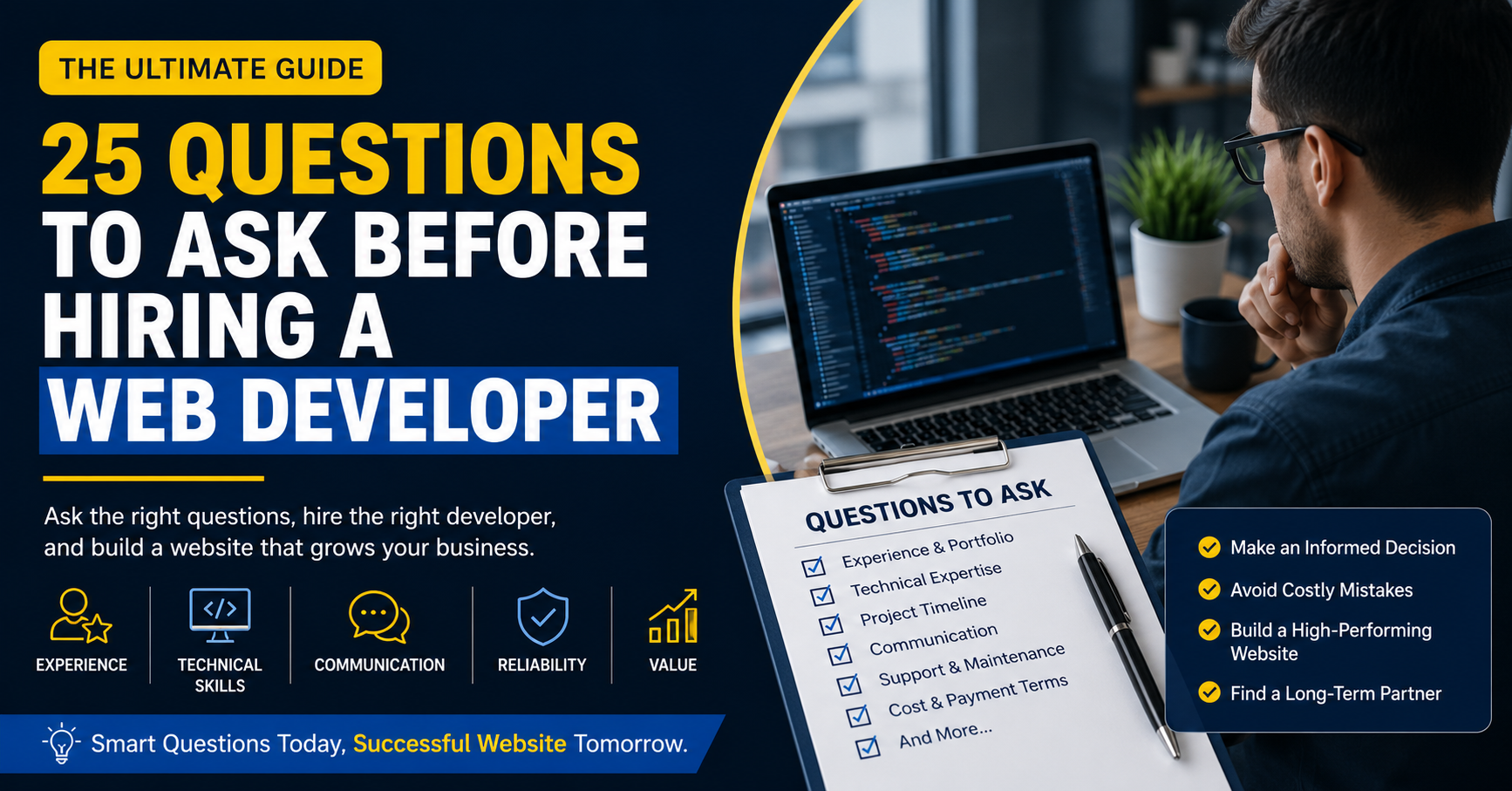
25 Questions to Ask Before Hiring a Web Developer
Hiring the right web developer is one of the most important decisions you can make for your business. Your website is often the first interaction potential customers have with your brand, and it plays a significant role in generating leads, building credibility, and driving sales. A poorly designed website can hurt your reputation, while a professionally developed website can become one of your most valuable business assets.
With countless freelancers, agencies, and web development companies available, choosing the right one can feel overwhelming. Asking the right questions before signing a contract helps you avoid costly mistakes and ensures your project is delivered on time, within budget, and to a high standard.
This guide covers 25 essential questions every business owner should ask before hiring a web developer.
Why Choosing the Right Web Developer Matters
A professional web developer does more than build attractive websites. They create websites that are fast, secure, mobile-friendly, SEO-ready, and designed to convert visitors into customers.
The wrong developer may leave you with slow-loading pages, poor user experience, security vulnerabilities, and expensive maintenance costs.
By asking the following questions, you’ll gain confidence in your decision and find a developer who truly understands your business goals.
1. How Much Experience Do You Have?
Experience matters. Ask how long they’ve been building websites and what industries they’ve worked with.
Developers with years of experience are more likely to anticipate challenges and deliver reliable solutions.
2. Can I See Your Portfolio?
Always review previous work.
A portfolio allows you to assess:
- Design quality
- User experience
- Mobile responsiveness
- Industry experience
- Creativity
- Functionality
Look for projects similar to your own business.
3. Have You Built Websites for Businesses Like Mine?
Industry experience can be valuable.
For example, if you own a logistics company, healthcare clinic, law firm, or eCommerce store, ask whether they’ve completed similar projects.
They’ll better understand your customers and required functionality.
4. Do You Build Custom Websites or Use Templates?
Some developers build completely custom websites, while others customise existing templates.
Custom websites offer:
- Better branding
- Improved performance
- Greater flexibility
- Unique design
- Easier scalability
Ask which approach suits your business.
5. Which Platform Do You Recommend?
Different businesses require different platforms.
Popular options include:
- WordPress
- Shopify
- WooCommerce
- Magento
- Webflow
- Custom-built solutions
Ask why they recommend a particular platform for your needs.
6. Will My Website Be Mobile-Friendly?
More than half of all web traffic comes from mobile devices.
Your website should automatically adapt to:
- Smartphones
- Tablets
- Laptops
- Desktop computers
A responsive design also improves Google rankings.
7. Do You Build SEO-Friendly Websites?
A beautiful website is useless if customers cannot find it.
Ask whether the developer includes:
- SEO-friendly URLs
- Fast loading speeds
- Meta titles
- Meta descriptions
- Schema markup
- Image optimisation
- Clean code
- XML sitemaps
Building SEO into the website from day one saves time and money later.
8. How Will You Improve Website Speed?
Website speed affects both user experience and search rankings.
Ask how they optimise:
- Images
- Caching
- Code
- Hosting
- Core Web Vitals
Fast websites generate more enquiries and sales.
9. What Security Measures Do You Include?
Cybersecurity is essential.
Ask whether they provide:
- SSL certificates
- Malware protection
- Security plugins
- Firewalls
- Regular updates
- Backup systems
Security should never be an afterthought.
10. Will I Own My Website?
This is one of the most important questions.
Ensure you own:
- Domain name
- Website files
- Hosting account
- Content
- Images (where applicable)
Avoid situations where developers retain ownership of your website.
11. Can I Easily Update the Website Myself?
Many businesses want to edit text, images, blogs, and products without relying on a developer.
Ask whether they’ll provide an easy-to-use content management system (CMS) and training if required.
12. What Is Included in the Project Cost?
Request a detailed breakdown covering:
- Design
- Development
- Content upload
- Contact forms
- SEO setup
- Testing
- Training
- Launch
Understanding exactly what’s included helps prevent unexpected costs.
13. Are There Any Ongoing Fees?
Some developers charge monthly fees for:
- Hosting
- Maintenance
- Security
- Backups
- Software updates
- Support
Ask for complete pricing before signing any agreement.
14. How Long Will the Project Take?
Every project should have a realistic timeline.
Ask about:
- Design stage
- Development stage
- Content integration
- Testing
- Final launch
Regular progress updates help keep the project on schedule.
15. Who Will Be Working on My Website?
Some agencies outsource work overseas, while others have in-house designers and developers.
Ask who will be responsible for:
- Design
- Development
- SEO
- Content
- Project management
Knowing who is involved improves communication and accountability.
16. Will You Help with Website Content?
Quality content is essential for SEO and conversions.
Ask whether they provide assistance with:
- Copywriting
- Service pages
- Blog writing
- Image selection
- Calls to action
Professionally written content often performs much better than generic text.
17. Do You Include Contact Forms and Lead Generation Features?
Your website should encourage visitors to take action.
Useful features include:
- Quote request forms
- Contact forms
- Live chat
- Click-to-call buttons
- Newsletter sign-ups
- Booking systems
These features help convert visitors into customers.
18. Can You Integrate Third-Party Tools?
Many businesses rely on additional software.
Ask whether they can integrate:
- CRM systems
- Payment gateways
- Email marketing platforms
- Google Analytics
- Google Search Console
- Booking systems
- Social media
These integrations streamline business operations.
19. Will My Website Be Easy to Expand Later?
Your business will grow over time.
Ensure the website can easily accommodate:
- New services
- Additional pages
- Online stores
- Customer portals
- Membership areas
- Booking systems
A scalable website saves redevelopment costs later.
20. Do You Test the Website Before Launch?
Quality assurance is essential.
Ask whether they test:
- Mobile compatibility
- Browser compatibility
- Forms
- Speed
- Security
- Broken links
- User experience
Comprehensive testing reduces post-launch issues.
21. What Happens After the Website Goes Live?
Launching your website is just the beginning.
Ask whether they offer:
- Technical support
- Maintenance
- Security updates
- Performance monitoring
- Content updates
- SEO services
Ongoing support ensures your website remains secure and effective.
22. Can You Provide Client References?
Speaking with previous clients gives valuable insight into:
- Communication
- Reliability
- Quality of work
- Timeliness
- Customer service
Positive references provide reassurance before making a commitment.
23. What Happens If Something Goes Wrong?
Unexpected issues can occur.
Ask about:
- Support response times
- Emergency fixes
- Backup restoration
- Warranty periods
A dependable developer will have clear support processes.
24. How Will You Measure Website Success?
Your website should produce measurable results.
Ask which metrics they’ll help you monitor, such as:
- Website traffic
- Lead generation
- Conversion rates
- Search rankings
- User engagement
- Page speed
Tracking performance allows continuous improvement.
25. Why Should I Choose You Over Other Web Developers?
Finally, ask what makes them different.
Look for answers that demonstrate:
- Experience
- Transparency
- Communication
- Technical expertise
- SEO knowledge
- Ongoing support
- Proven results
- Commitment to client success
The best developers focus on solving business problems, not just building websites.
Red Flags to Watch Out For
While interviewing web developers, be cautious if they:
- Promise unrealistic delivery times.
- Guarantee #1 Google rankings.
- Cannot provide a portfolio or references.
- Avoid discussing ownership of your website.
- Offer extremely low prices with vague deliverables.
- Have poor communication or slow response times.
- Don’t explain their development process.
- Provide no maintenance or post-launch support.
Recognising these warning signs early can save you time, money, and frustration.
Final Thoughts
Hiring a web developer is a long-term investment in your business. A professionally built website can increase brand credibility, attract more customers, improve search engine visibility, and generate consistent leads for years to come.
By asking these 25 questions before making your decision, you’ll be better equipped to choose a developer who understands your goals, communicates clearly, and delivers a website that supports your business growth.
Don’t rush the hiring process. Compare several developers, review their work carefully, and choose a partner who offers the right balance of technical expertise, transparency, creativity, and ongoing support. The right web developer won’t just build a website, they’ll help build your online success.



 sales@appandwebsite.au
 1800 491 810